Sitewide Backlinks: We Checked 31 Footer Credits. 23 Passed a Followed Link

We read 153 pages across 28 small-business and community websites and recorded every footer credit link to a web agency, theme or platform. All 31 credits repeated on every page we fetched. 23 were followed links, 8 were nofollow and none used rel="sponsored". Here is what Google's spam policy actually says about footer links, when a sitewide link is fine, and how to fix one that isn't.
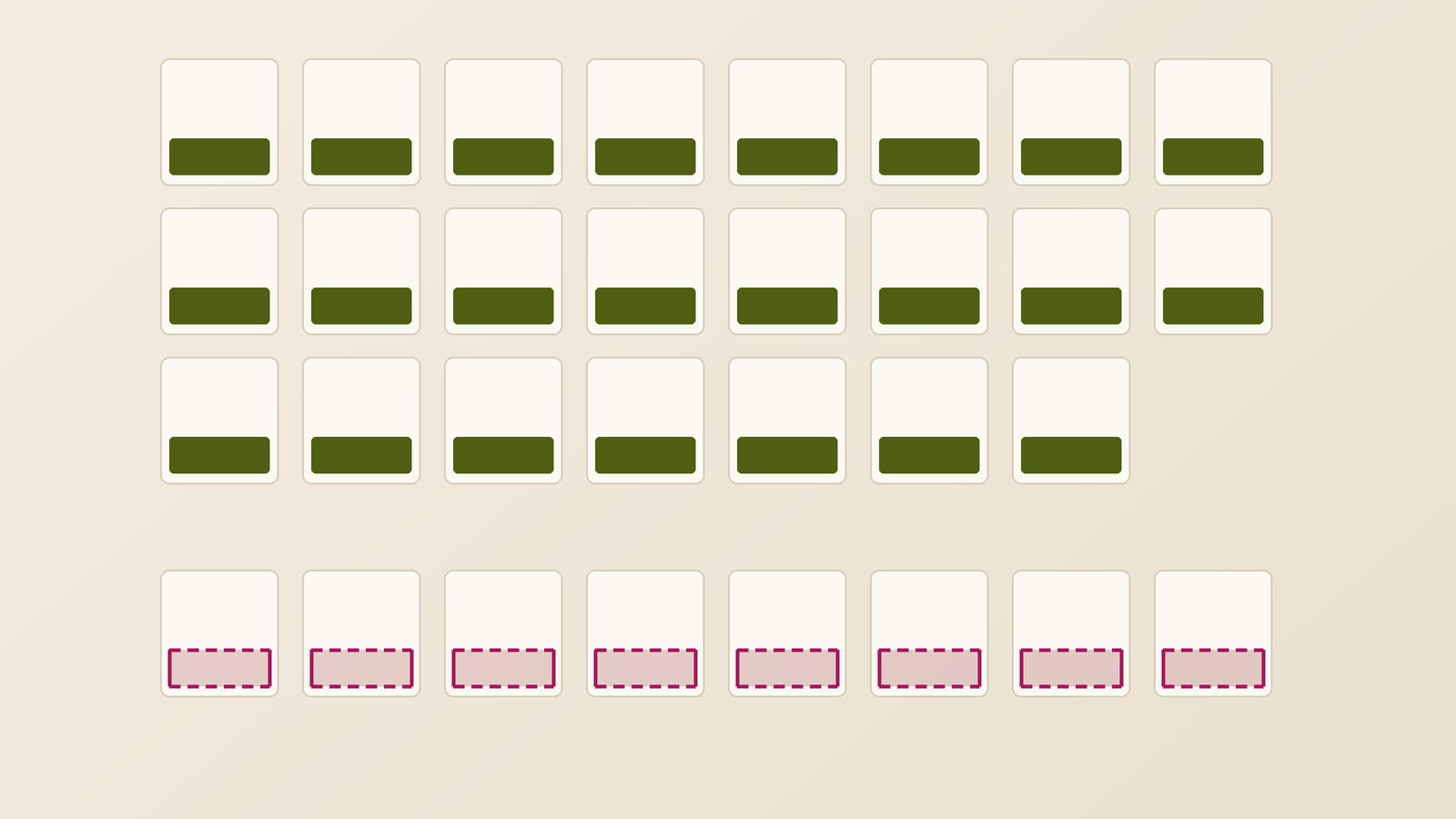
Sitewide backlinks are links that appear on every page of another website, usually in its footer, sidebar or blogroll. The most common kind is a credit: "Website by", "Theme by", "Powered by". One placement can add hundreds or thousands of backlinks from a single referring domain. That's why they swell backlink totals, and why Google's link spam policy names "widely distributed links in the footers or templates of various sites" as an example of spam. To see how these credits are actually marked, we checked 31 of them on 28 real sites. 23 passed a followed link. None used rel="sponsored".
In a hurry? Here's the rule. A sitewide link is fine when a site chooses to link to you because it's useful, such as a blogroll, a partner or a parent company. It becomes a policy problem when you place the same followed link across many sites you don't run, the classic example being your agency or theme credit on client sites. The fix is one attribute: rel="nofollow" or rel="sponsored".
On November 6, 2026 we looked at:
- 28 websites carrying a footer credit: client sites from the public portfolios of three UK web design agencies, plus small community sites using WordPress themes. That gave 31 credit links, because three sites credit both a theme and a platform.
- 153 pages on those sites: the homepage plus one to four pages from each site's own navigation, read in raw HTML for every credit link's anchor text and
relattribute. - 11 ranking guides on sitewide backlinks, tallied for what they tell you to do.
- Google's own wording, from its spam policies, its guide to qualifying outbound links, and things John Mueller has said on the record.
What we found in 31 footer credits#
Every credit we recorded was sitewide in the plain sense: it sat in the footer template and was on all 153 of the 153 pages we fetched. We only fetched two to five pages per site, so "every page" means every page we checked, but a footer template is shared by design.
Three results stood out.
Three in four credits passed ranking credit. 18 links had no rel attribute at all. Five more had only noopener, noreferrer or generator, which are about browser security and site metadata. None of them blocks link value. Only 8 of 31 were nofollow, and not one used sponsored, the value Google says it prefers for paid placements.
Nobody was stuffing keywords. 27 anchors were the brand name alone, and 4 were a short phrase plus the brand, such as "Designed by RJ Goodall". The "Website by" or "Site by" wording almost always sat outside the link as plain text. We didn't see a single keyword-rich anchor like "web design leeds". So the risk in this sample isn't the anchor text. It's the rel attribute.
Agencies were the most likely to leave the link followed. Theme and platform credits were split more evenly, though those groups were only five links each.
One agency, Silky Ocean Studios, was inconsistent across its own clients. On tuckfieldestates.com its credit is followed. On adaptsys.com the same credit is nofollow. Two other agencies, RJ Goodall and Engine Room Technology, left every credit we found followed. On kpeakroofing.co.uk, "RJ Goodall" is followed on all five pages we read. The ThemeGrill credit on assuremortgages.co.uk, "Theme Spacious by ThemeGrill. Powered by: WordPress", is nofollow on both links. That's the default set by the theme's author, not something the site owner chose.
It's a small sample of small sites, an illustration rather than a survey. But the pattern is easy to recognise: most sitewide credits are followed because nobody ever decided otherwise.
What Google actually says about sitewide links#
There are two statements, and they look like they disagree until you read them closely.
The policy. Google's spam policies define link spam as "creating links to or from a site primarily for the purpose of manipulating search rankings". Among the examples are "Widely distributed links in the footers or templates of various sites" and "Exchanging goods or services for links". The section closes with the way out: "It's not a violation of our policies to have such links as long as they are qualified with a rel="nofollow" or rel="sponsored" attribute value to the tag."
The engineer. In a 2013 Webmaster Central hangout, transcribed by Marie Haynes, John Mueller said: "Generally speaking, sitewide links can be fine. That's not something where we would say that if a link is across a whole website then it's automatically considered bad." In 2016, as reported by Search Engine Roundtable, he told site owners there was no need to disavow organic links "just because maybe it's a sitewide link or in the blogroll."
Put them together and the test isn't where the link sits. It's who placed it and why. A blogger who lists your site in their blogroll made an editorial choice once, and it repeats because blogrolls repeat. An agency that puts the same followed credit on dozens of client sites, as part of a deal the client never thought about, is distributing a link across "various sites". The words in the policy are "various sites", and that describes the agency credit exactly.
The policy's "exchanging goods or services for links" can also describe a design job or a free theme given in return for a followed footer link.
How to handle sitewide backlinks, in five steps#
1. Find your sitewide links. In any backlink tool, sort referring domains by number of backlinks. A domain sending hundreds of links to the same URL with the same anchor is almost always a template link. Our guide on how to check backlinks covers the free options.
2. Sort them by who placed them. Separate links you or a vendor placed (agency credits, theme credits, widgets, sponsorships, paid sidebar spots) from links a site owner chose (blogrolls, partner pages, a parent company linking to its brands).
3. Fix the ones you control. If you're the agency or theme author, change your footer template to rel="sponsored" or rel="nofollow". Google's qualify-outbound-links page says sponsored is for "advertisements or paid placements" and that nofollow "is still an acceptable way to flag them, though sponsored is preferred." Either keeps the click and the brand mention. If the credit is on a client site, ask the client, or push the change in your next maintenance update.
4. Leave the editorial ones alone. Mueller's advice on blogroll and sitewide links was to "just let them be." Don't disavow a real partner's link because it shows up 900 times in a report. Save disavowing for the patterns in our toxic backlinks guide.
5. Read your totals per referring domain, not per backlink. One footer link on a 2,000-page site can show up as 2,000 backlinks from one domain. If your backlink count jumps while referring domains stay flat, a template link is usually the cause, not new authority.
The part most guides get wrong#
We read the 11 top-ranking guides for "sitewide backlinks" and "sitewide links seo".
All 11 say sitewide links can be fine, and 10 of 11 also say they're risky. That's fair enough, but only 5 tell you the actual fix: mark the link nofollow or sponsored. None quotes the line in Google's policy that names footer and template links, even though it's one sentence long and settles most of the argument. 9 of the 11 publishers sell SEO tools or link building, and only one, Editorial.Link, showed data of its own: of 44,000 link-selling sites active in June 2023, 29% were inactive a year later. It isn't about footers, though. Six guides mention that sitewide links inflate backlink counts, the most practical point for anyone reading a report.
When you want a sitewide link, and when you want one link#
If you're building links, the honest question is what a footer link is worth to you. Where a link sits on the page matters, which we covered in contextual backlinks. A link inside the body of a relevant article is an editorial vote. The same domain linking from 2,000 footers is still one site's vote, repeated.
So don't chase sitewide placements. Don't pay for sidebar or footer links that pass ranking credit, because that's the "text links that don't block ranking credit" example in the policy. Our buying backlinks guide explains where the line is. And keep anchors branded, as every credit in our sample did, using our anchor text guide.
What's worth chasing is the link a writer adds to an article because your page answers something their readers need. That means pitching one relevant page to one person at a time, which is slow by hand.
Want editorial links instead of footer credits? GenLink's backlink agent finds sites writing about your topic, pitches the page that fits from your own mailbox, and follows up. Start free with your site's URL; paid agents are $50 a month.
If you're the agency or theme author#
You probably have the most sitewide links of anyone, and they're the easiest to fix. In our sample, agency credits were followed 17 times out of 21. Change your footer snippet to this:
Website by <a href="https://youragency.com" rel="sponsored">Your Agency</a>
You keep the credit, the click and the brand mention, which is where the new business comes from anyway. You stop sending a followed link from every page of every client site, and that pattern is the one in the policy. If your portfolio is mixed, as one agency's was in our check, pick one rule and apply it everywhere.
Swapping footer credits for real links? Paste your site and GenLink's backlink agent finds relevant publishers, sends each one a personal pitch and tracks replies. The free plan costs nothing to try.
Frequently asked questions#
What are sitewide backlinks? They're links that appear on every page, or nearly every page, of another website because they sit in a shared template such as the footer, sidebar, header or blogroll. Backlink tools count each page as a separate backlink, so one sitewide link can show up as thousands of backlinks from one referring domain.
Are sitewide backlinks bad for SEO? Not by themselves. John Mueller has said "sitewide links can be fine". They become a problem when they're placed across many sites to pass ranking credit, such as followed agency or theme credits, paid footer links or widgets. Google's spam policy lists "widely distributed links in the footers or templates of various sites" as link spam.
Should footer credit links be nofollow? Yes, if you placed them yourself across client or customer sites. Google's policy says such links are not a violation "as long as they are qualified with a rel="nofollow" or rel="sponsored" attribute value." In our check, 23 of 31 footer credits had neither.
Do sitewide links count as one link or many? In backlink tools they count as many backlinks from one referring domain. Google hasn't published how it weighs repeated template links, so judge them by referring domains, and don't read a jump in backlink totals as new authority.
Should I disavow sitewide backlinks? Usually not. Mueller has said there's no need to disavow organic links just because they're sitewide or in a blogroll. Consider it only for links you didn't earn that match a manipulative pattern, such as paid sidebar links or spam widgets, and ask for nofollow first where you can.
Is a blogroll link a sitewide backlink? Yes. A blogroll repeats on every page, but it's usually an editorial choice by the site owner, which is the case Google treats as fine. Keep it if a real site added you.
Are sitewide links good for anything? They bring brand mentions and referral clicks, which is why agencies want them. For rankings, a link in the body of a relevant article usually does more than the same domain repeating you in its footer.
The short version#
Sitewide backlinks are only a risk when they're placed, not earned. In our check of 31 footer credits, 23 were followed, none was sponsored, and every one repeated across the pages we read. If you put credits on sites you don't own, add rel="sponsored". If someone chose to link to you sitewide, leave it alone. Then put your effort into editorial links; if you want an agent to do the outreach, start on the free plan.