Contextual Backlinks: What Google Reads and What Sellers Sell

All nine guides we read say contextual backlinks are worth more. None backs it with a study that tests it, six are published by link sellers, and none says a paid link has to be marked sponsored.
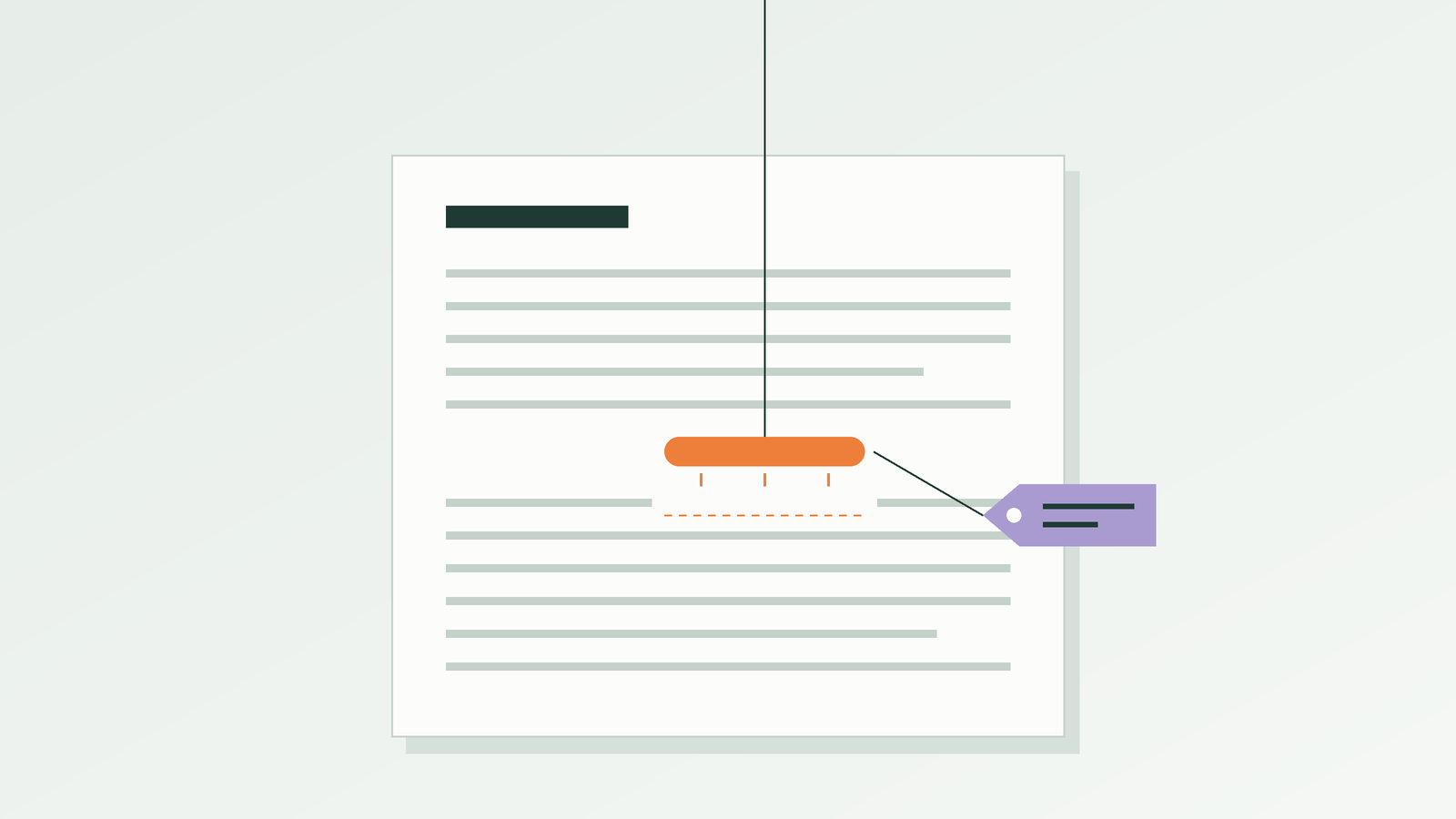
A contextual backlink is a link placed inside the body of a relevant article, surrounded by sentences about the same subject, rather than in a sidebar, footer, author bio or directory listing. Google does read that context. Its link documentation says anchor text "provides context for the link" and that "the words before and after links matter." The catch is that "contextual backlinks" is also a product, sold one link at a time, and a paid link stays a paid link wherever it sits in the paragraph.
We read nine guides that rank for "contextual backlinks" on 13 October 2026. All nine say contextual links are worth more than other links. None cites a study that compares them, six are published by companies that sell links, and none says a paid link has to carry rel="sponsored".
Short answers#
- What is a contextual backlink? A link from another site, set inside the main text of a page on a related topic, where the surrounding sentence explains why the reader should click.
- Does Google value contextual links more? Google says context helps it understand a link. It has never published a weighting that says in-body links count for more, and none of the guides we read cites one.
- Can I buy contextual backlinks? You can buy a placement, at a median of $160.75 per link across the four sellers we priced. Unless it's marked sponsored or nofollow, Google's policy calls it link spam.
- What's the safe way to get them? Give an editor a reason to cite you inside their own article. That link is contextual by default.
What Google says about link context#
Google has no page called "contextual backlinks." Two of its documentation pages cover the three things the term mixes together:
- Context. Google's SEO link best practices say good anchor text "provides context for the link," and add: "the words before and after links matter, so pay attention to the sentence as a whole." Chaining links side by side is discouraged because "you lose surrounding text for each link."
- Placement. The spam policies list "Widely distributed links in the footers or templates of various sites" as link spam. That's the opposite of a contextual link: one link on thousands of pages, with no sentence around it.
- Payment. The same policy calls "Exchanging money for links, or posts that contain links" link spam, unless the link is "qualified with a rel="nofollow" or rel="sponsored" attribute value." The outbound link guide says to mark "advertisements or paid placements" with
sponsored.
Google uses the sentence around a link to understand the page it points to. Nothing in its documentation exempts a paid link because it sits in a relevant paragraph.
How to tell if a link is contextual#
Four checks, each traceable to the Google wording above:
- It's in the main content. The body of an article or resource page, not the navigation, footer, sidebar, author box or a sitewide template.
- The page is about your topic. A link to your accounting software inside a post about restaurant marketing has a sentence around it, but not context.
- The sentence explains the link. A reader should know what they'll get before clicking. "This breakdown of invoice terms" works. "Click here" doesn't.
- It stands alone. Not one of five links chained in a row, and not repeated across every page of the site.
A link that passes all four is contextual. Whether Google counts it depends on how it got there, which is where most guides go quiet.
What the top-ranking guides say#
We took nine guides returned by a US web search for "contextual backlinks" and checked each one for seven things. The publishers were Brafton, SEO Buddy, Loganix, editorial.link, Click Raven, Collaborator, LinkBuilder.io, dofollow.com and Seopital.
Every guide claims contextual links are more valuable. Loganix says search engines "give much greater weight to them compared to non-contextual links." SEO Buddy says they improve "PageRank as well as domain authority over time." Not one of the nine supports the claim with a test of contextual against non-contextual links. Brafton comes closest, citing a Backlinko statistic, but that statistic is about how many backlinks top results have, not where those links sit.
Six of the nine publishers sell links, guest posts or link insertions. Three mention that Google takes a dim view of buying links. editorial.link is the most direct about buying them: "do we recommend it? No." None of the nine says what Google actually asks for, which is a sponsored or nofollow attribute on any paid link. Collaborator, a link marketplace, says the opposite: "you won't get penalties for building links in contextually relevant content." Only dofollow.com links to Google's documentation at all.
What sellers charge per contextual link#
Three of the nine guides link to per-link prices. We added two sellers that publish exact niche edit prices, Rhino Rank and FatJoe, and recorded every tier on 13 October 2026.
Across 18 per-link tiers from four sellers, the median price is $160.75. The cheapest tier at each seller runs $60 to $200. The range tracks a vendor metric, either Ahrefs Domain Rating or referring domains, rather than anything about the paragraph the link lands in. For comparison, Ahrefs' own outreach test found sites charged an average of $361.44 to sell a link outright and $77.80 for a guest post.
Every one of these is a placement in someone else's article that you paid for. In Google's terms, that is the definition of a paid link, and it's link spam unless it's qualified. Buying one unmarked is a bet that it won't be detected, not a reading of the policy. Google's December 2022 link spam update said SpamBrain works "to neutralize the impact of unnatural links," and that credit passed by those links is lost. Usually nothing gets penalized. The link just counts for nothing, and the money is gone.
Are contextual backlinks actually worth more?#
Probably, for a plain reason. A link inside a relevant sentence gives Google the surrounding text it says it uses, and it's the link a reader is most likely to click. A footer link repeated on thousands of pages gives Google one anchor and no sentence.
What nobody has shown publicly is how much more. Google doesn't publish link weightings, and none of the nine guides cites a controlled comparison. Context helps; the size of the effect is unknown.
The practical takeaway doesn't depend on the size. The links worth chasing are editorial links in relevant articles, and those are contextual almost by definition. Chasing "contextual" as a separate goal mostly leads to buying insertions.
Contextual links vs niche edits and guest posts#
These terms overlap, and sellers use them interchangeably.
- Contextual link describes where a link sits: in relevant body copy.
- Niche edit describes how it got there: added to an existing article, usually for a fee. Loganix's niche edit page prices them at $200 and $400 per link.
- Guest post describes who wrote the article: you, for someone else's site. Google's policy names "optimized anchor text in articles, guest posts, or press releases" as link spam.
An editor citing your study inside their own article is contextual, not a niche edit, and not a guest post. That's the version with no policy risk.
How to earn contextual backlinks in 5 steps#
Step 1: find pages that already discuss your topic. Search for recent articles, guides and resource pages on the subject your page covers. Link building prospecting covers how to build that list.
Step 2: find the sentence your page improves. Read each article and locate the claim that's unsupported, outdated or vague. A link has context when it fixes a specific sentence, not when it's dropped anywhere on the page.
Step 3: have something worth citing. Original data, a calculator, a clear definition or a better explanation. If the honest answer to "why would they link?" is "because we asked," stop and fix the page first.
Step 4: pitch the specific sentence. Email the author, quote the line, and say what your page adds for their readers. Don't offer money, and don't write the anchor text for them. See link building outreach.
Step 5: use the formats that produce in-body links. Broken link building replaces a dead link inside an existing paragraph. Digital PR and expert quotes land you inside reporters' copy. Both produce contextual links an editor chose.
Steps 1 and 4 are the slow part. GenLink's agent finds articles already covering your topic and pitches each author from your own domain, every day.
The limits of this evidence#
Our nine pages came from a web search tool on one day, not a verified Google results page. Whether a guide "defines" the term or "sells links" is our judgment from a hand reading, and two publishers were unclear. Prices are list prices from public pages on 13 October 2026. Two pricing pages returned 404 and weren't counted. Google doesn't publish how it weights links, so nothing here, ours included, measures the value of a contextual link directly.
Put the link where an editor would#
A contextual backlink is a description of a good link, not a type you can order. The editor who chooses to cite you inside a relevant article gives you the context, the click and the credit in one go. A placement you pay for gives you the context and a policy problem.
Want in-body links you never have to mark sponsored? Put one agent on your domain to pitch the authors already writing about your topic.
Frequently asked questions#
What is the difference between a contextual and a non-contextual backlink? A contextual backlink sits inside the main text of a relevant page, with a sentence around it. A non-contextual backlink sits in a footer, sidebar, author bio, directory or sitewide template, usually with no surrounding text about your page.
Are contextual backlinks dofollow?
Not necessarily. Contextual describes placement, and any in-body link can carry nofollow or sponsored. See dofollow vs nofollow links for what each attribute does.
Is a link in an author bio contextual? No. A bio sits outside the article's main text and repeats on every post by that author. It can still send readers, but it isn't in the body copy.
Are internal links contextual links too? They can be. Google recommends linking to related pages on your own site "in context," inside the text. Our guide to internal linking for SEO covers how.
How many contextual backlinks do I need? There's no fixed number. Look at the referring domains of the pages ranking above you and count the ones that are editorial, relevant and in-body. That's the gap. See what makes a backlink high quality.