Reciprocal Links: Are Link Exchanges Bad for SEO in 2026?

Two sites linking to each other is normal. Trading links to rank is link spam. Where Google draws that line, why three-way swaps don't get around it, and what a hand count of the ranking guides leaves out.
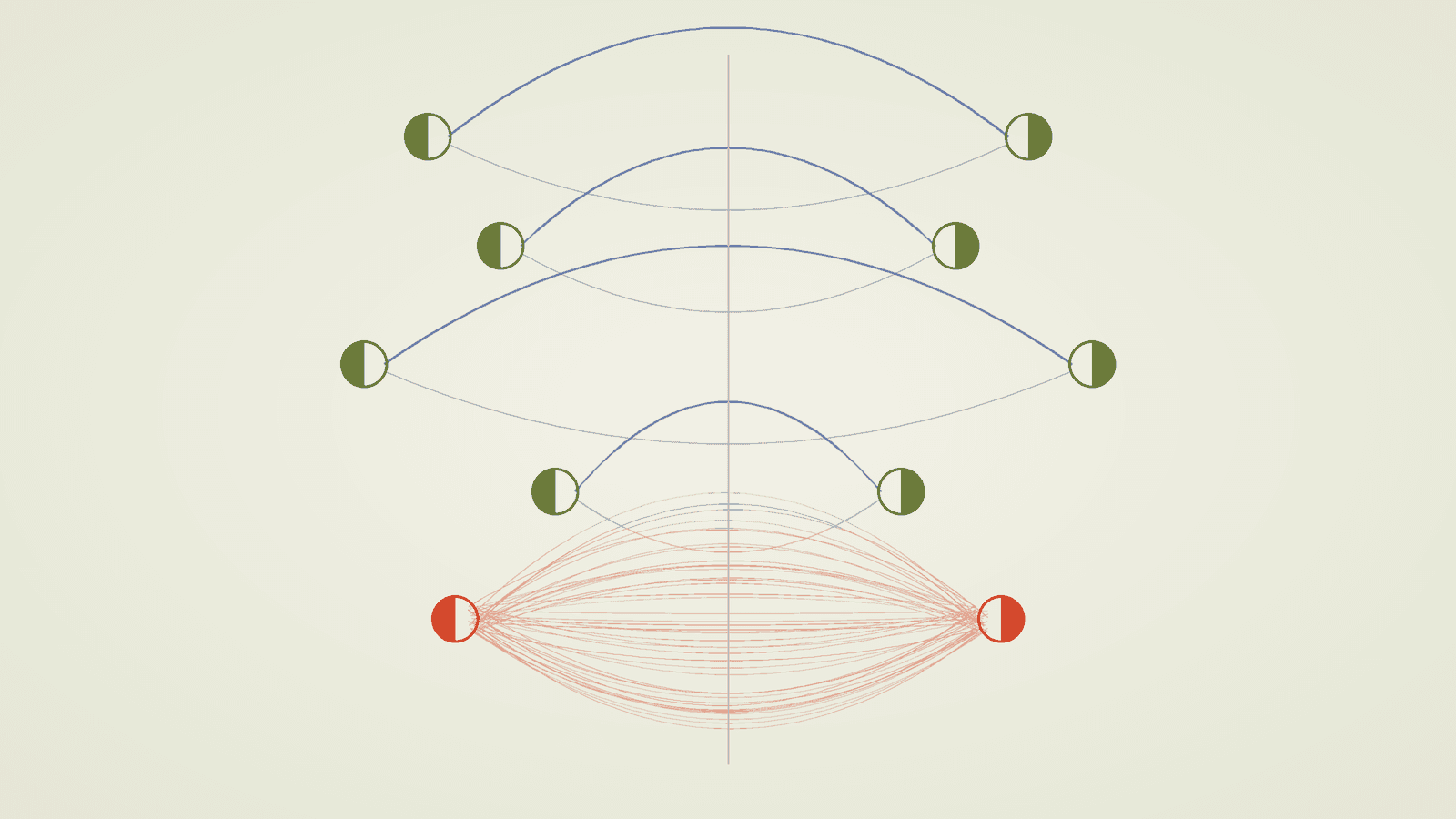
A reciprocal link is a pair of links between two sites that link to each other, and a link exchange is the deal that creates one on purpose: "link to me and I'll link to you." Reciprocal links are not banned. Google's spam policy names excessive link exchanges as link spam, which puts the line at intent and scale, not at the existence of a link back.
The short answers, before anything else:
- What is a reciprocal link? Site A links to site B, and site B links back to site A. Full answer below.
- Are reciprocal links bad for SEO? Not on their own. Swapping links to manipulate rankings, especially at scale, is link spam. What Google says.
- Are three-way (ABC) link exchanges safe? No. They hide the pattern but not the deal, and Google's policy is about the deal. Why ABC swaps don't help.
- How many reciprocal links are too many? Google gives no number, and neither does any guide that can back one up. How to judge it instead.
- Should I accept a link swap request? Only if you would link to that page anyway, with nothing promised in return. The five-step check.
That covers the search. The method comes next, then the evidence.
What is a reciprocal link?#
A reciprocal link is two links pointing in opposite directions. Your guide links to a supplier's spec sheet, and the supplier's case study links back to your guide. Nobody arranged it, and most sites have links like that.
A link exchange is different. It is an agreement: one site adds a link because the other site added one, or promised to. The links may look identical to the natural pair above. The difference is why they exist.
This matters because link building works on the idea that a link is an editorial choice. A link given in payment for another link is not a choice about quality. It is a trade, and Google treats trades for links the way it treats paying for them.
Are reciprocal links bad for SEO?#
Not on their own. Google's spam policies, last updated 28 August 2026, list the practices it counts as link spam. One line covers this topic: "Excessive link exchanges ("Link to me and I'll link to you") or partner pages exclusively for the sake of cross-linking."
Two words carry that sentence. Excessive puts the problem at volume and intent, not a single link back. Exclusively means a real partner page is fine and a page built to hold swapped links is not.
Google's manual actions help page uses the same words when it tells site owners how to clean up outbound links: "Identify any links on your site that were paid for or that appear to violate our link spam policy, such as excessive link exchanges." It then gives the fix: remove those links, "or change them so that they no longer pass PageRank, for example by adding a rel="nofollow" or a more specific attribute."
The data says reciprocal links are everywhere, including on pages that rank. Ahrefs checked 140,592 sites that each get 10,000 or more visits a month from Google, counting only followed links. Its study found that "73.6%" have some reciprocal links and that "27.4%" have at least a 15% overlap between the sites they link to and the sites that link to them. In a second sample of 112,440 pages ranking in Google's top ten, "43.7%" had some reciprocal links.
Ahrefs warns that the study "suffers from survivorship bias": penalised sites were probably excluded from the start. So the honest reading is narrow. Reciprocal links are a normal by-product of the web, and plenty of ranking sites have them. That does not make a swap campaign safe.
Are three-way (ABC) link exchanges safe?#
No. In a three-way exchange, often sold as an "ABC" link swap, site A links to site B, B links to site C, and C links back to A. No pair links directly back, so a simple backlink check misses it. The deal is still there.
Google's policy does not define link spam by shape. It defines it by purpose: "Link spam is the practice of creating links to or from a site primarily for the purpose of manipulating search rankings." A triangle built to trade links has exactly that purpose, with one more site in the loop.
John Mueller of Google explained why the shape does not matter in a 2021 office-hours video, reported by Search Engine Journal. A link exchange where "you link to me and therefore I will link back to you" is "essentially against our webmaster guidelines," he said, and "our algorithms would look at that and try to understand what is happening here and try to ignore those links." He added: "It doesn't matter if it's... like topically relevant or if it's kind of like a useful link. If you're doing this systematically then we think that's a bad idea because from our point of view those are not natural links to your website. They're only there because like you're doing this deal with the other site."
I found no Google statement that names three-way exchanges directly. But a triangle is still a deal with other sites, and it usually involves more of them, set up through a network or a broker. That makes it a better fit for "systematically," not a worse one.
How many reciprocal links are too many?#
Google has never published a number, and I found no guide that can support one. The useful question is not "what percentage is safe" but "how many of these exist because of a deal."
Two reference points help. In Ahrefs' study, "27.4%" of 140,592 sites with steady Google traffic had at least a 15% overlap between the sites they link to and the sites that link back. Ahrefs ran the same check on its own blog and found that "19.25% of the domains we link to also link to us." A high overlap, on its own, is normal for an active site in a busy niche.
The other reference point is Mueller's description of when a human reviewer gets involved: "if this is the majority of the links to your website like this then they might apply manual action." So the risk grows with the share of your link profile that came from trades, not with the count of sites that happen to link both ways.
A working rule: any link you can trace to an agreement is a traded link, and traded links should either carry rel="nofollow" or rel="sponsored" or not exist. Everything else is just the web.
How to audit your reciprocal links in five steps#
Run this once on your existing links, then use steps 3 to 5 as a filter for every swap request that lands in your inbox.
- Export both directions. Pull the referring domains to your site from any backlink tool, then crawl your own site for outbound links to other domains. Our backlink audit guide covers the export.
- Find the overlap. Match the two lists by domain. Every domain on both lists is a reciprocal pair.
- Ask why each link exists. For each pair, ask one question: would this link be here if the other site had never linked back? If yes, it is an editorial link and you leave it alone.
- Flag the trades. Pairs created in an exchange, links on "partners" or "resources" pages that exist only to list swap partners, and any link that came from an email offering a swap or an ABC deal. Check whether each flagged link is on a page about your topic at all.
- Fix your side, then stop. On the links you control, add rel="nofollow" or rel="sponsored" to traded links, or remove them. You do not need to chase the other site, and Google's own disavow page starts by asking whether disavowing is necessary at all. Our toxic backlinks guide explains when it is.
Skip the swap. Earn the link outright. Every hour spent trading links is an hour not spent pitching sites that would link with nothing in return. GenLink does that pitching for you: it finds the pages worth a link, writes to the person who can add it, follows up and sorts the replies. The free tier runs one agent.
What the top ranking guides on reciprocal links leave out#
I searched "reciprocal links" in a US web search on 3 October 2026 and read the top seven results: Lenovo's glossary, Respona, an opinion essay on Arachnoid, Infidigit, Rank Math, Wikipedia's link building article and Tag Team Design. Infidigit blocked a direct fetch, so I read it through a summary only.
Most of the results are glossary entries, and they mostly agree with Google: reciprocal links are fine in moderation and risky when overused. But only one of the seven, Rank Math, uses Google's own phrase "excessive link exchanges." Only one, Respona, cites any measured data, and it is the same Ahrefs study quoted above. Only Lenovo mentions nofollow as an option for a link you have agreed to.
Two of the seven call reciprocal links bad outright. Respona calls them "still considered a 'link scheme'" and a "violation of Google's Webmaster Guidelines," which is stricter than the policy's actual wording. An opinion essay on Arachnoid goes further.
None of the seven recommends a three-way swap, and none gives a threshold for "too many." Three are published by companies that sell link building tools or services. The gap is the practical one: what to do with a swap request, and how to tell a natural pair from a traded one in your own profile.
The limits of this evidence#
Seven results from one search on one day is a snapshot, and one was read through a summary. The Ahrefs study counts how common reciprocal links are, not whether they help or hurt, and Ahrefs itself flags its survivorship bias and that correlation is not causation. It was last updated in March 2020, and Mueller's 2021 comments reach us through Search Engine Journal's report. What does not depend on any of that is the policy text, which names excessive link exchanges as link spam today.
Link to what you would cite anyway#
A reciprocal link is just two sites that found each other useful. A link exchange is a trade dressed up as that. Google's policy aims at the trade and at the scale, and three-way setups only move the trade around. Link to pages you would cite with nothing in return, mark anything you agreed to as sponsored or nofollow, and spend the time a swap would cost on outreach to sites that link because the page deserves it.
Links nobody has to pay back. One-way editorial links are slower to earn by hand, which is why swaps are tempting. An agent that sends the pitches and follow-ups every day makes the slow way the easy one.
Frequently asked questions#
Is linking to a site that links to me a problem? No. If both links are editorial, there is nothing to fix. Google's policy concerns exchanges made for ranking, not sites that happen to cite each other.
Should reciprocal links be nofollow? Only the traded ones. A link you added because of an agreement should carry rel="sponsored" or rel="nofollow". A natural link to a source you trust can stay followed. The dofollow vs nofollow guide explains the attributes.
Are partner pages bad for SEO? A page listing real partners, stockists or integrations is normal. Google's policy names "partner pages exclusively for the sake of cross-linking", meaning pages that exist only to hold traded links.
Can I get a manual action for link exchanges? Yes. Google lists link schemes among its manual actions for unnatural links. Most traded links are more likely to be ignored than penalised, but an exchange network at scale is the pattern the policy describes.
What about guest post swaps, where we write for each other? It is the same trade with more words. If each article exists to carry a link to the other site, the links are part of an exchange. If each article is good enough that the host would publish it anyway, the links are editorial.
Do reciprocal links still pass any value? Natural ones can, like any editorial link. Traded links are what Google's systems are built to discount, so the most likely outcome of a swap is no value, not a penalty.